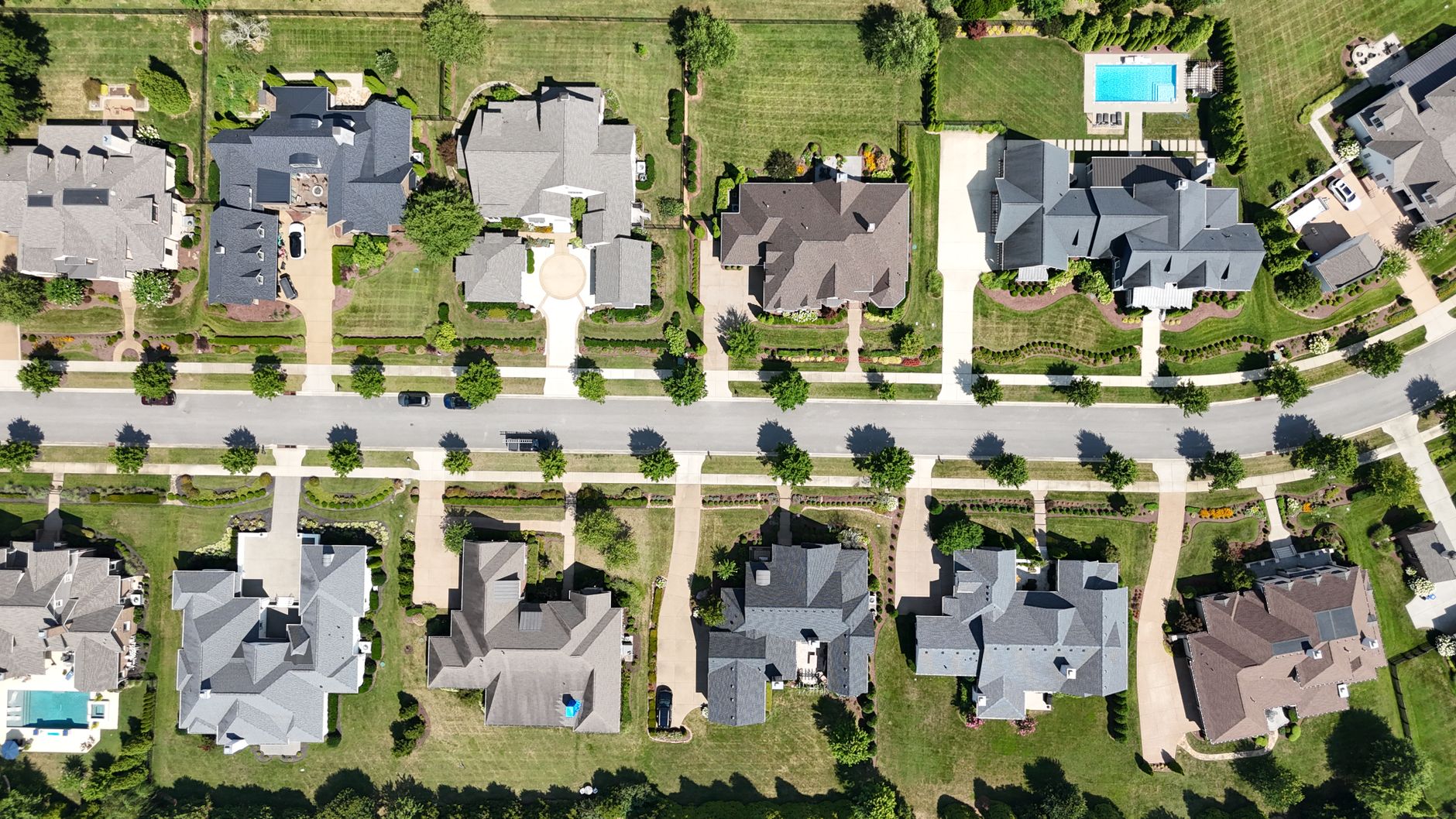
Geographic farming and digital community authority are not competing strategies — they are two halves of a complete market ownership approach. Traditional farming builds recognition among people who already live in your community. A community expert website builds authority with everyone who has not yet found you: relocating buyers, AI search engines, Google, and the neighbors who simply haven't thought about selling yet.
The most successful community-specialist agents are not debating which approach to use. They are combining both, recognizing that offline trust and digital authority each do things the other cannot — and that together, they create a market position that is genuinely difficult for a competitor to unseat.
This article breaks down what each approach does well, where each has gaps, and exactly how a community expert website fills those gaps to make everything you're already doing offline more effective.
What Traditional Geographic Farming Does Well?
Geographic farming — the practice of concentrating all marketing activity on a defined neighborhood or community — has been a proven path to listing dominance for decades. When executed consistently, it works because of a simple principle: familiarity drives trust, and trust drives referrals and listings.
The tangible strengths of traditional farming are hard to argue with:
- Personal recognition: Residents see your face, name, and logo on postcards, at community events, and in the neighborhood. Over time, your name becomes synonymous with the community itself.
- Relationship depth: Door-knocking and neighborhood events create real human connections that no website can fully replicate. When a neighbor decides to sell, they call the agent they actually know.
- Demonstrated commitment: Consistently showing up — in mailboxes, at the pool association meeting, at the holiday party — signals staying power. Residents trust agents who are clearly invested in the community long-term.
- Competitive moat via consistency: Most agents who try farming quit within 12 months because results are slow. Agents who stay for 18–36 months often find the field has cleared itself.
These strengths are real. But traditional farming has structural gaps that become more significant with each passing year — and those gaps are exactly where digital community authority picks up the slack.
The Gaps Traditional Farming Cannot Fill
Traditional farming is, by definition, a one-way broadcast to people who already live in your community. It does almost nothing to reach the people who will be your next buyers: the ones relocating from out of state, the ones doing research months before they act, or the ones who will ask Google or ChatGPT for a recommendation before they ever open a mailer.
Where Traditional Farming Falls Short
- Reaches only current residents, not incoming buyers
- Zero visibility in Google, ChatGPT, Perplexity
- High cost-per-touch (printing, postage, time)
- No persistent content — each mailer disappears
- Doesn't establish expertise with out-of-area buyers
- No data capture or lead nurturing mechanism
- Invisible to relocating buyers doing online research
Where Digital Authority Fills the Gap
- Captures buyers relocating from anywhere
- Ranks in Google, gets cited by AI search engines
- Content compounds — articles rank for years
- Works 24/7 without ongoing per-piece cost
- IDX shows buyers real listings on your site
- Email capture builds a nurture list over time
- Demonstrates depth of community knowledge
Consider what happens when someone two time zones away is relocated by their employer to a city near your community. They are not on your postcard list. They will never see your farming mailers. But they will search Google for information about your community — HOA fees, school districts, driving distances, what homes cost. If your community expert website is the most authoritative resource they find, you have introduced yourself before they ever landed in your market.
The Digital Authority Gap Most Farming Agents Are Leaving Open
Here is the exact gap most farming agents leave open: they are recognized offline by current residents, but they are invisible online. Their digital footprint consists of a generic brokerage profile, a Zillow page they don't fully control, and a website that covers every neighborhood they're licensed in rather than going deep on the one community they actually want to own.
The irony of traditional-only farming: You invest thousands of dollars and hundreds of hours establishing yourself as the local expert — then buyers who find your community through Google are handed directly to Zillow's Premier Agent program, which may route that lead to one of your competitors. A community expert website reclaims that traffic for you.
AI search engines compound this problem significantly. When someone asks ChatGPT or Google AI Overviews "who is the top real estate agent in [your community]," the system generates an answer by synthesizing authoritative content it has indexed. If you have a deep, structured, community-specific website, AI search has something to cite. If you don't, someone else gets named — or the AI simply says it cannot identify a specialist.
How the Two Strategies Work Together?
The agents who have figured this out treat their traditional farming activities and their community website as one integrated marketing system. Each investment in one channel amplifies the return from the other.
Offline Farming Drives Website Traffic
Every postcard you send, every event you sponsor, every sign you plant drives a percentage of residents to look you up online. If your community expert website is waiting for them — packed with community market reports, neighborhood guides, listing updates, and local expertise — that postcard visit converts into a returning visitor, a saved search, or an immediate inquiry. Without the website, that traffic goes to Zillow.
The Website Builds Credibility Before the First Conversation
When a resident receives your mailer and types your name into Google, what they find either confirms your claim to community expertise or undermines it. A comprehensive community website — with market reports, community guides, a community blog, and local testimonials — does an enormous amount of selling before you ever get on the phone. By the time the resident calls, they already believe you are the expert.
Content Serves Both Channels
Every piece of content you create for your website can be repurposed for traditional farming. A market report page becomes a printed market report mailer. A community event you blog about gets referenced in your next postcard campaign. A neighborhood FAQ that ranks on Google gets trimmed and printed as a one-sheet for your next open house. The content investment compounds across channels.
Digital Reach Extends the Farming Zone Without Additional Cost
Traditional farming reaches the homes within your defined geography. A community expert website reaches anyone, anywhere, who searches for information about your community. Relocation buyers, adult children of current residents who are helping aging parents, real estate attorneys who refer luxury clients — none of these people are on your postcard list, but all of them can find your website.
What Agents Who Only Do Digital Are Missing?
It's worth naming the other failure mode: agents who build a community expert website but do no offline farming miss the relationship depth that converts hesitant sellers. A homeowner who has received your market report mailer for two years, seen you at the neighborhood association meeting, and now found your website when they started thinking about selling is at a fundamentally different level of trust than someone who only found you in a Google search.
The website alone can win buyers and incoming relocation clients. But for listing conversion — which requires the highest level of trust — the relationship built through consistent offline presence still matters. The combination is what produces agents who close 30–40% of listings in a single community year after year.
Building Your Combined Strategy
If you are starting from scratch, the most effective sequence is:
- Month 1–2: Launch your community expert website with core pages — community guide, market reports, IDX filtered to your community, and a community blog with at least 4–5 foundational articles. Get indexed in Google and establish your digital baseline.
- Month 2–3: Begin traditional farming with an introductory mailer that references your website. Residents who are curious can verify your expertise online. Your farming mailer and your website are now working together from the start.
- Month 3–12: Publish a community market report monthly — both on the website (for Google and AI search) and as a printed mailer (for offline recognition). The same content serves both channels.
- Month 6+: Your website begins ranking for community-specific search terms. Buyers find you without knowing you. Residents who have been getting your mailers find more depth when they look you up. Your offline reputation and your online authority are reinforcing each other.
By the end of year one, the combination of a consistent offline presence and a well-optimized community website creates something that neither approach alone can build: genuine market authority. You are the agent residents know from their mailbox, the agent Google shows when they search for community information, and the agent AI assistants cite when asked who knows this community best.
The compounding advantage: Traditional farming costs roughly the same amount every year — printing, postage, and time. A community expert website costs roughly the same amount every year but produces exponentially more content, more indexed pages, more inbound traffic, and more AI citations each year. The digital investment compounds. The offline investment holds steady. Together, the total return grows every year you maintain both.