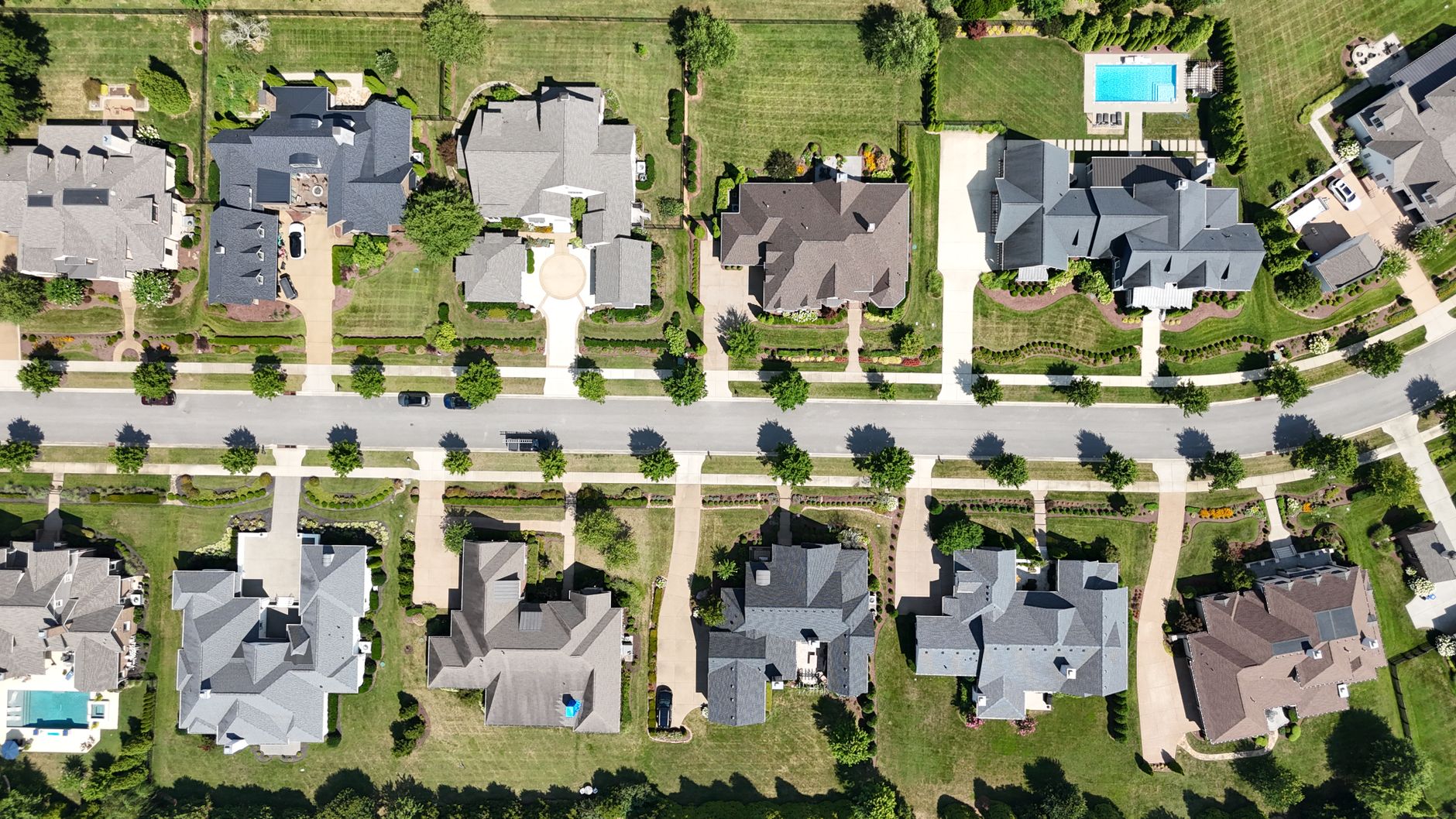
The single most consequential decision a community specialist agent makes is which community to focus on. Choose well and the investment of building a community expert website, a content library, and an offline presence compounds for years. Choose poorly and you spend two years building authority in a community that can't support the business volume you need — or competing against an agent who has been there for a decade and isn't leaving.
Most agents make this choice based on proximity and intuition: they choose a neighborhood they drive through, one that feels successful, or the one where they happened to get their first listing. These are not bad starting points, but they are incomplete ones. A more deliberate selection process — checking five key criteria before committing — dramatically improves the odds that your community investment pays off.
The Five Criteria That Matter
1. Annual Transaction Volume
Transaction volume is the most fundamental criterion and the most commonly overlooked. A community needs to generate enough annual sales to support your marketing investment and produce the listing volume a specialist business requires.
The rough minimum: 20–30 transactions per year for a sustainable community specialist practice. Communities with fewer than 20 closings annually leave too little margin for the normal variability of when listings come to market — you might have a good year and a bad year with very little volume signal between them.
How to measure: Pull the community's MLS sales history for the last 24 months. Count the closed transactions. Divide by two for the annual average. If it's consistently above 25, the volume is there. If it's averaging 10–12, the community may be too small to support a dedicated specialist practice without supplementing with other communities.
2. Price Point and Commission Economics
Community specialist work requires more concentrated marketing investment than a generalist approach — the target audience is smaller, so each touchpoint costs more on a per-contact basis. For this investment to pencil out, the commission on each transaction must be large enough to justify the cost of maintaining your community presence.
As a general benchmark: the average community transaction should produce at minimum $8,000–$12,000 in gross commission before expenses. At a typical 2.5% buyer's or listing commission, that implies average transaction values in the $320,000–$480,000 range as a floor for a community specialist business model.
Communities above that floor — and especially those with average transaction values above $600,000 or $1M — have dramatically favorable economics for community specialist agents. A single listing in a $1.2M community produces roughly $30,000 in gross commission. One transaction per month covers the annual cost of a community expert website many times over.
3. Competitive Landscape
The competition analysis question is: does an entrenched community specialist already exist who has built genuine, established authority in this community? Not just any agent who has listed there — an agent who has operated a consistent, visible presence for three or more years, with a recognizable brand in the community.
If such an agent exists, you face a substantially longer timeline to reach parity. You are not starting from zero — you are starting from behind. It's not impossible to compete, but it requires a clear answer to "what do I offer that incumbent does not?" before committing to the effort.
If no specialist exists — if the community's sales history shows a rotating cast of different agents and no single agent consistently holds more than 10–15% market share — the community is ripe. There is a market position available that is not currently being defended.
How to measure: Search for "[Community Name] real estate agent" and "[Community Name] homes for sale" in Google. Check who appears most consistently. Look at MLS sold data to see who has listed the most homes in the community over the past 3 years. If one name keeps appearing with consistent frequency, that agent is your benchmark. If results are diffuse across many agents with no clear leader, the community is open.
4. Community Identity and Searchability
Not all communities have the characteristics that make them good community expert website candidates. The ideal community has:
- A clear, recognized name that homeowners and buyers use when searching — not just a zip code or a loose neighborhood reference
- A definable boundary that can be used to filter an IDX feed precisely — HOA boundaries, gate perimeter, or subdivision filing work well
- An identifiable lifestyle — golf community, waterfront, gated, equestrian — that creates a searchable topic cluster beyond just the name
- Enough online search activity to justify an SEO investment — verify via Google Suggest and related searches that people are actually searching the community name
A newer development with a working name but limited market awareness takes longer to establish searchable authority. An established community with a name that residents actively use in their own searches is a far better target for community expert website investment.
5. Personal Connection and Access
Living in the Community
Resident agents have authentic credibility that no marketing budget can replicate. They know the HOA Board, the difficult streets, the best sections, and the longtime neighbors. This is the fastest path to genuine authority.
Existing Relationships
Knowing residents through country club membership, HOA involvement, youth sports, or community events creates relationship equity before the first mailer goes out. These warm networks accelerate trust-building significantly.
Geographic Proximity
Living near (but not in) a community and being genuinely familiar with it is a workable starting point. Becoming a regular presence — joining the club, attending events, being visible — can build credibility within 12–18 months.
Pure Market Research
Choosing a community entirely for its financial metrics without any existing connection is the hardest path. Possible, but requires a longer investment horizon and more deliberate relationship-building before transactions follow.
Running the Numbers: A Simple Decision Matrix
Before committing to a community, score each candidate against these five criteria:
- Transaction volume: 25+ closings/year = 3 pts, 15–24 = 2 pts, under 15 = 1 pt
- Price economics: Avg price over $600K = 3 pts, $350–600K = 2 pts, under $350K = 1 pt
- Competition: No specialist agent = 3 pts, some competition but no dominant agent = 2 pts, entrenched specialist = 1 pt
- Community identity: Strong name recognition, gated/defined boundary = 3 pts, moderate identity = 2 pts, loose neighborhood = 1 pt
- Personal connection: Resident = 3 pts, relationships inside = 2 pts, proximity only = 1 pt
A score of 12 or higher is a strong candidate. A score of 9–11 is viable with appropriate timeline expectations. A score below 9 warrants reconsidering the community or developing a more detailed competitive strategy before committing.
One community at a time. The most common mistake new community specialists make is trying to cover two or three communities simultaneously. Spreading effort across multiple communities prevents achieving the depth of presence in any one of them that makes the strategy work. Commit fully to one community for 18–24 months before considering expansion. Market dominance requires concentration.
What Happens After You Choose?
Once you have selected your community, the question shifts from which community to how to establish authority quickly. The answer is always the same: launch your community expert website and begin offline farming simultaneously, so that both channels are working from day one. Your digital presence validates your offline presence and vice versa.
Agents who launch only the website and skip the offline component take longer to convert listings because they haven't built personal recognition. Agents who do only offline farming and have no digital presence lose buyers to portals and miss the AI search audience entirely. The combination, started at the same time, builds authority on both fronts from day one.